



The Toughest Room for HDR: Inside HDR10+ Automotive Certification
A living room can get dim for movie night. A car cabin can’t — it swings from tunnel darkness to direct midday sun in seconds, sometimes while the vehicle is moving. That’s a genuinely harder environment for HDR than almost anywhere else content gets watched, and it’s exactly the problem HDR10+ Automotive certification was built to solve.
Why in-vehicle displays are a different problem
Every certification HDR10+ Technologies LLC runs is ultimately about the same thing: verifying that a display can actually deliver what HDR content promises, under real conditions. For a television, “real conditions” means a living room with somewhat controllable lighting. For a car’s center display or digital cluster, it means direct sunlight through a windshield one moment, a shaded parking garage the next, and everything in between — often while ambient light is changing continuously rather than settling into one steady state the way a room’s lighting usually does.
What the certification actually verifies
Automotive-grade HDR10+ certification tests a display’s ability to deliver consistent brightness, contrast, and color accuracy across varying ambient light and viewing angles, and specifically validates HDR10+ ADAPTIVE-style behavior — dynamically adjusting brightness and color to the cabin’s actual lighting in real time, rather than relying on one fixed calibration. It’s the same underlying dynamic-metadata approach HDR10+ uses everywhere else, applied to a use case with a much wider and faster-moving range of viewing conditions.
The first certified hardware
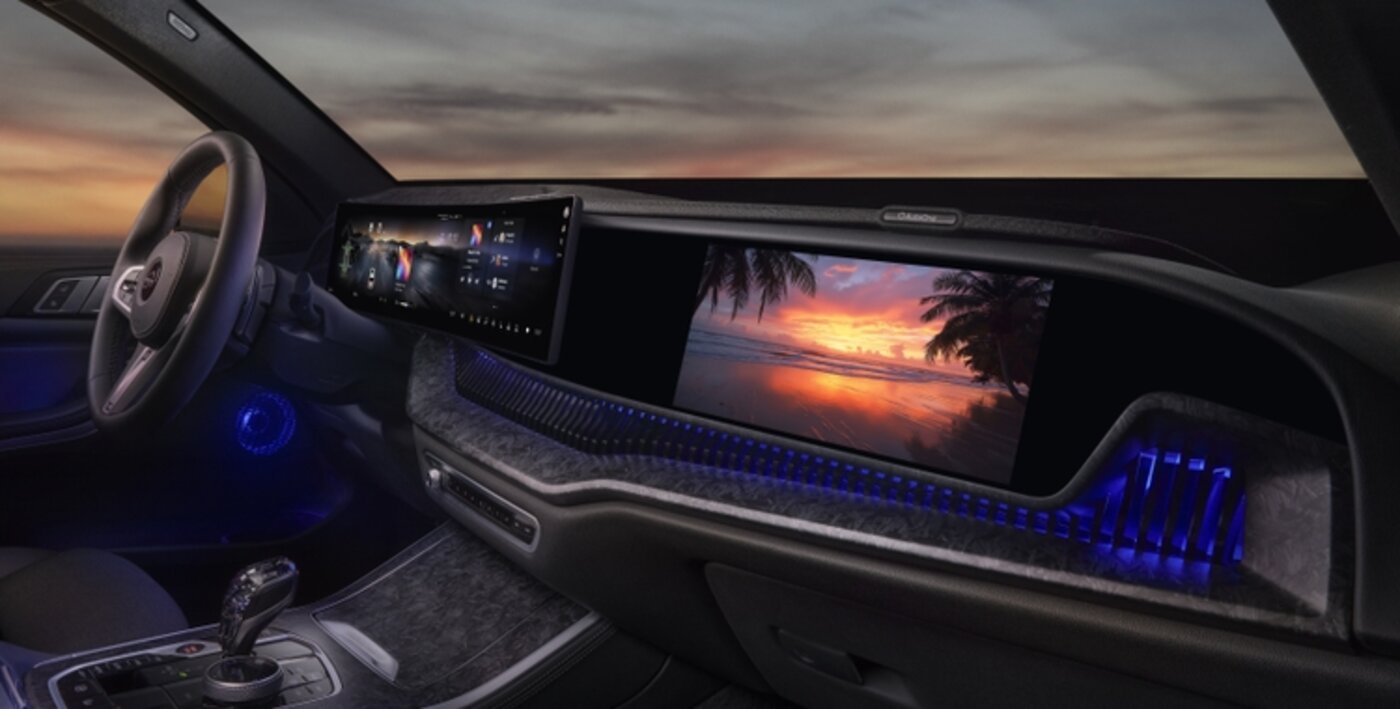
HARMAN’s Ready Display lineup — the NQ3, NQ5, and NQ7 series, built on Samsung Neo QLED technology — became the first product to earn HDR10+ Automotive certification. HARMAN worked directly with Samsung and Panasonic to help define the HDR10+ Automotive specification itself, and HDR10+ Technologies LLC developed the certification program that validates it. That puts the same certification infrastructure already used for televisions and mobile devices behind in-vehicle displays, rather than leaving automotive HDR to ad-hoc, unverified claims.
Why this matters beyond a spec sheet
Passenger entertainment, navigation, and driver-information displays all benefit from a screen that stays accurate rather than washing out in sunlight or over-darkening in shade. As vehicles add larger and more central displays — for streaming, navigation, and increasingly for safety-relevant information — a display that can’t hold picture quality across real cabin lighting isn’t just a picture-quality issue, it’s a usability one.
Independent confirmation
Announcing the certification, Shilpa Dely, Vice President and Ready Display Business Lead at HARMAN International, said: “Earning the world’s first HDR10+ Automotive certification is how we’re delivering on that commitment,” referring to HARMAN’s broader commitment to visual quality across “intense midday sunlight to shifting city lights.”
Read HARMAN’s full announcement for more detail.