


How HDR10+ Makes the Middle Seat Immersive
Inflight entertainment screens are an unusual home for a display technology built around deep blacks and bright highlights — small screens, mounted a couple feet from your face, on an aircraft that’s constantly changing cabin lighting. It’s also one of the places HDR10+ has quietly become standard equipment, seat by seat.
Why seatback screens are a legitimate HDR use case
It’s easy to assume a small seatback display doesn’t need the same dynamic range as a living room television, but the viewing conditions argue the opposite: cabin lighting shifts constantly across a flight — bright at boarding, dim during a red-eye, flooded with window light on a daytime route — and a screen sitting close to your eyes makes contrast and black level differences more noticeable, not less. HDR10+’s scene-by-scene dynamic metadata is a genuine fit for content watched in exactly that kind of variable environment.
Panasonic Avionics’ Astrova: the platform carrying it
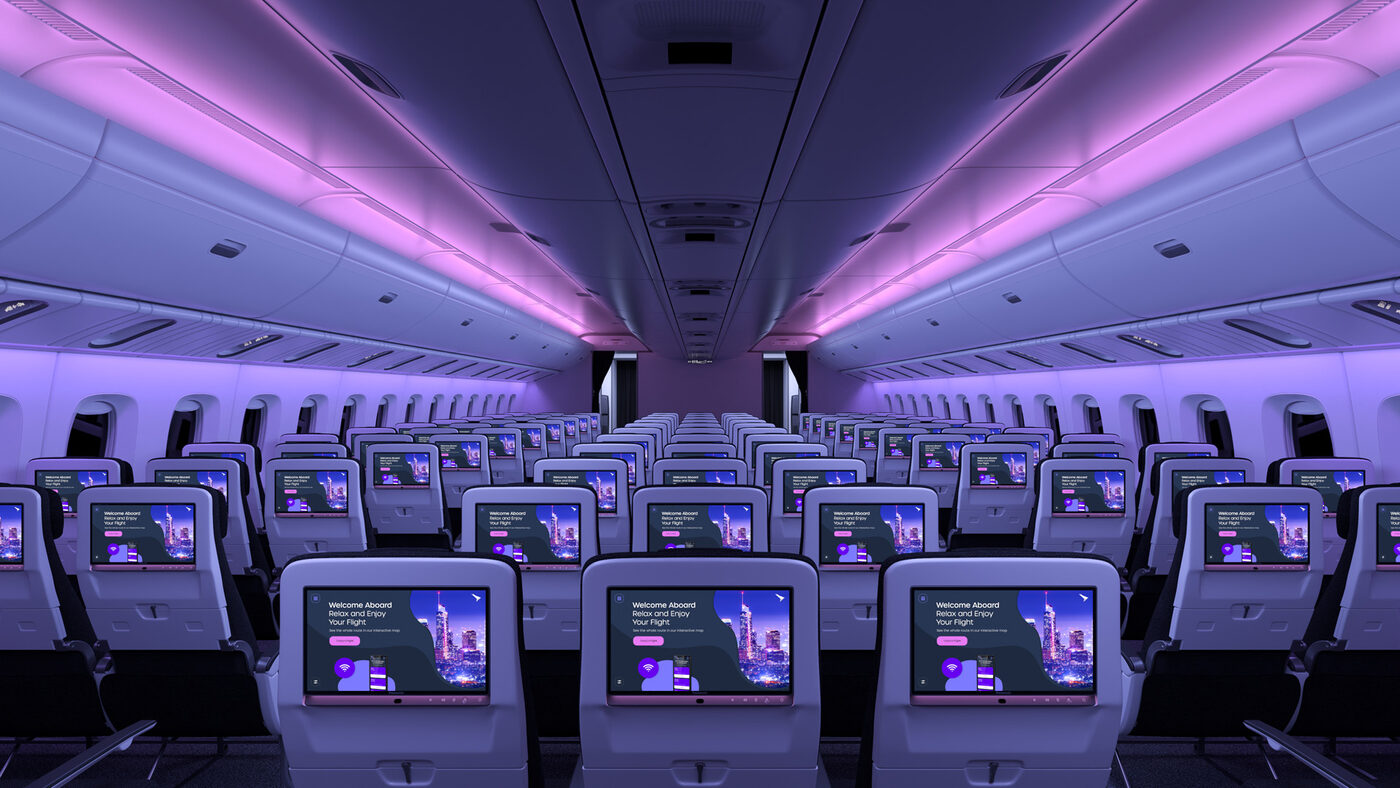
Astrova, Panasonic Avionics’ inflight entertainment platform, uses 4K OLED displays certified for HDR10+ at every seat — the same dynamic-metadata technology used in home televisions, delivering deep contrast and rich blacks in a format built specifically for the aircraft cabin. Since launching at the Aircraft Interiors Expo in 2022, Astrova has grown quickly, with more than 30 airlines — including Air Canada, Emirates, Japan Airlines, Qantas, Qatar Airways, and United Airlines — selecting the platform for their fleets. That growth reflects the platform as a whole, not picture quality alone: Astrova also brings wireless Bluetooth audio, fast USB-C charging at every seat, and a modern interface. HDR10+ is the part of that package responsible for how the picture itself actually looks.
What HDR10+ actually adds on a plane
The same fundamentals apply in the air as anywhere else: dynamic metadata lets each scene get its own tone-mapping treatment instead of one compromise setting for an entire film, preserving shadow and highlight detail that a static format would flatten. On an OLED seatback panel, that translates directly into deeper blacks and more visible highlight detail — noticeable at exactly the close viewing distance a seatback screen requires.
Certification, not just a spec claim
As with every HDR10+ implementation, inflight displays carrying the HDR10+ badge go through the same certification process used for televisions and mobile devices — verifying the hardware actually delivers HDR10+ content correctly rather than simply supporting the file format. That consistency is part of what lets studios and streaming partners deliver the same mastered HDR10+ content to airlines that they deliver to televisions at home, without a separate mastering pass for the cabin environment.
Independent confirmation
On what Astrova is designed to deliver, Andy Masson, SVP Products and Strategy at Panasonic Avionics, said the goal was to “create an environment that is an extension of a person’s relationship with the airline” — with accurate, detailed HDR picture quality one part of making that cabin experience feel considered rather than generic.
Read APEX’s coverage of Astrova’s growth for more detail.