



One Instruction for a Whole Movie: What Static Metadata Gets Wrong
Every piece of HDR content carries more than just picture and sound — it also carries metadata: technical instructions that tell a display how to interpret the brightness and color information it’s receiving. How often those instructions update over the course of a program is one of the biggest practical differences between HDR formats, and it’s the difference that separates HDR10 from HDR10+.
What metadata actually does
Think of metadata the way you’d think of the address on an envelope — separate from the letter itself, but essential to delivering it correctly. For HDR video, that “address” includes things like the color volume of the content and the brightest and average light levels in the program. A display uses this information to figure out how to fit the source content’s full range into its own specific brightness and color capabilities.
Static metadata: one profile for the whole runtime
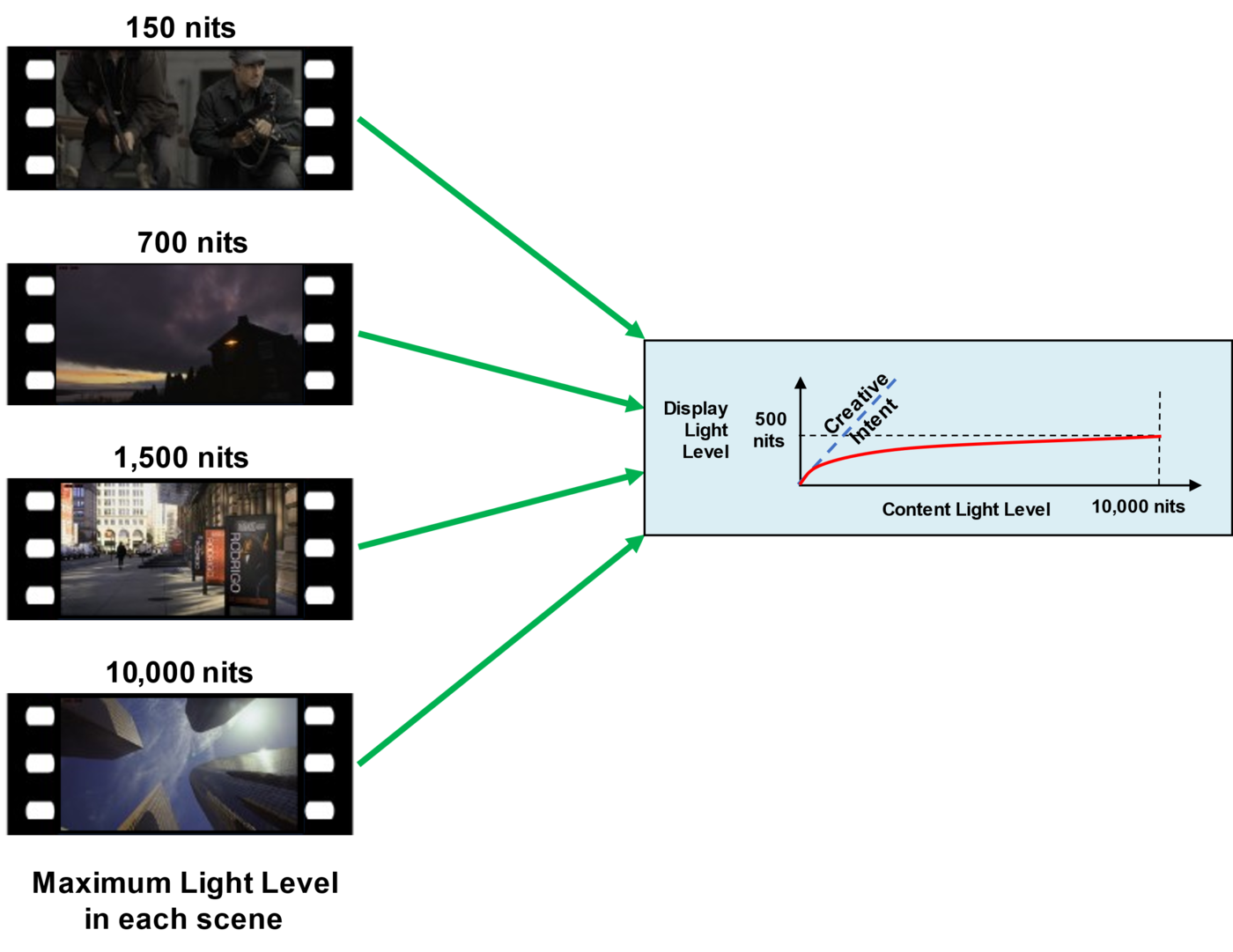
HDR10 uses static metadata — a single set of these instructions, calculated once and applied to an entire movie, show, or game from start to finish. It’s based on the single brightest moment in the whole program, which means every other scene has to work within a profile that wasn’t actually built for it.
Dynamic metadata: a fresh instruction set per scene
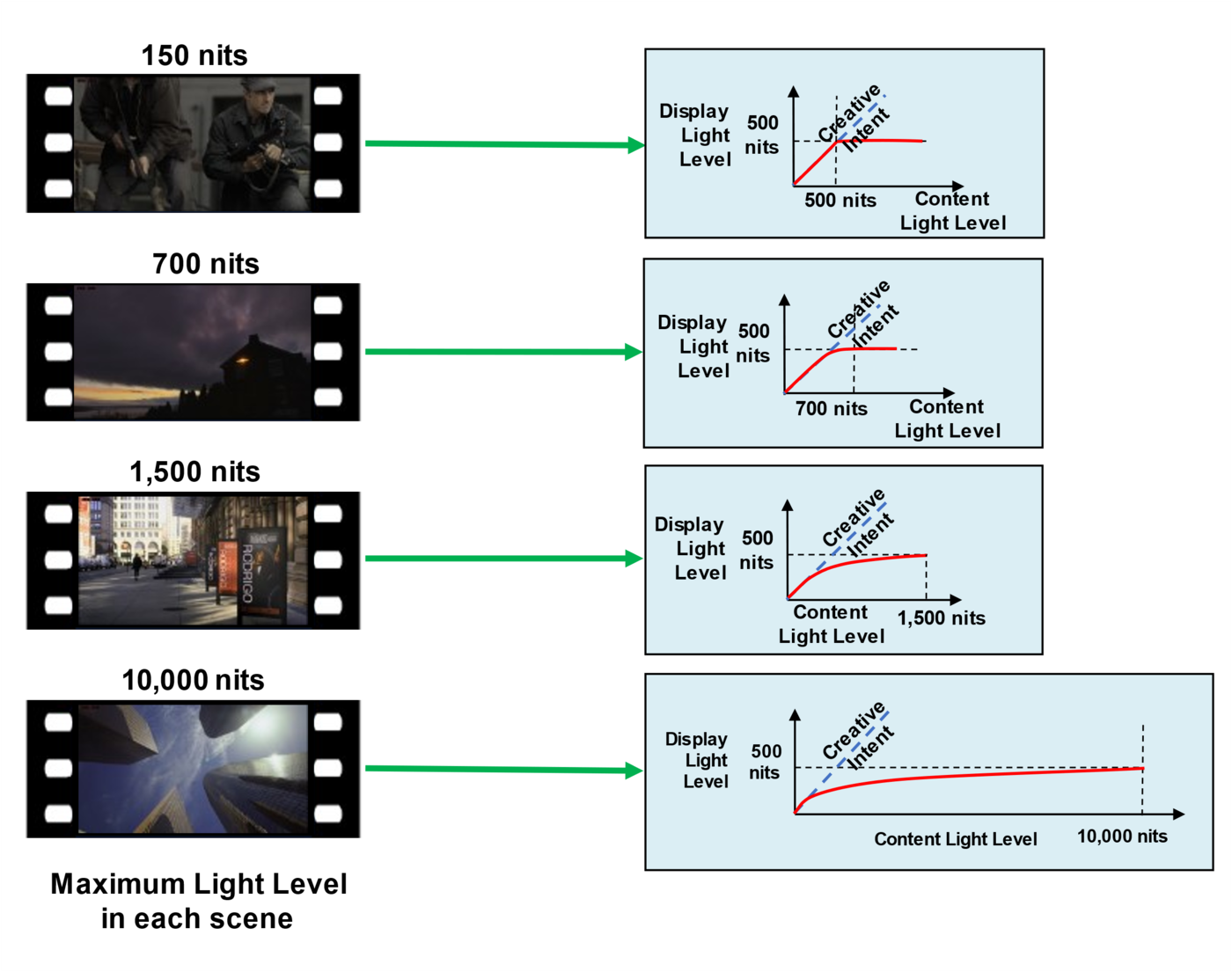
HDR10+ adds dynamic metadata on top of that same foundation — new tone-mapping and color-volume instructions calculated for each individual scene (or, for live broadcast, frame by frame), rather than one profile for the whole program. A display receiving HDR10+ content gets a tailored curve for a dim interior scene, and a completely different tailored curve for the sunlit exterior that follows it — instead of one compromise curve trying to cover both.
Why this matters more as scenes get more varied
The gap between static and dynamic metadata is easy to miss in content that stays roughly the same brightness throughout, and much easier to see in content that jumps around — a movie cutting between a candlelit room and a sunlit exterior, or a game moving between a dark cave and an open, bright map. Static metadata forces both extremes through the same global compromise; dynamic metadata gives each one its own treatment.
Insignificant resource or cost to add
Dynamic metadata does meaningfully more work than static metadata, but it doesn’t cost meaningfully more to deliver — the additional data adds only a few hundred bits per frame, a rounding error next to the millions of pixels of actual picture data in that same frame. That’s what let HDR10+ add real scene-by-scene precision while staying fully backward compatible with HDR10 devices, which simply ignore the extra metadata they don’t use.
Independent confirmation
KTC’s technical breakdown of static and dynamic HDR metadata illustrates the practical difference directly: with dynamic metadata, a dark cave can be mapped to preserve shadow steps, while a sunlit sky in a different scene gets its own separate treatment to retain cloud texture and highlight detail — exactly the scene-by-scene precision static metadata can’t offer.
Read KTC’s full explainer on static vs. dynamic metadata for more technical detail.